
Journal
The Small Herb Garden Every Tired Mother Needs
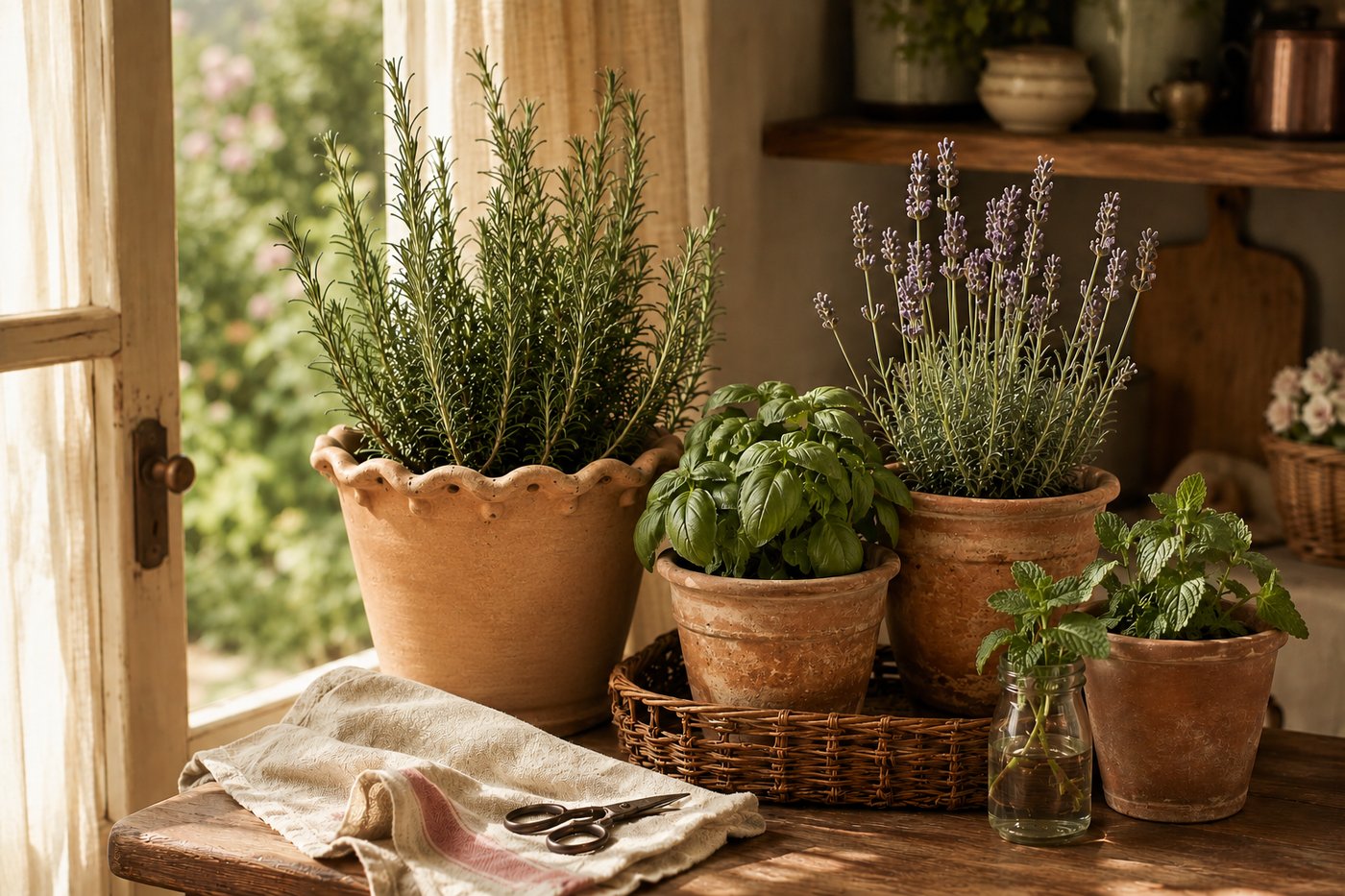
You did not come here looking for a hobby. You came because something inside you, quieter than the rest of the day, has been asking for a small living thing to tend. Not a project. Not a productivity ritual. Something gentle and green that answers to you, and to nothing else.
An herb garden is one of the smallest and most forgiving versions of that. Seven small plants, an afternoon to set them in, a few minutes of tending each day, and a kitchen that begins to smell like the season outside. None of it is glamorous. None of it will look like a magazine spread. But it does a quiet kind of work on a tired nervous system that almost no other small purchase will — the work of watching something grow slowly under your care.
The seven herbs below are the ones I would begin with, and the ones I have come to know best through quiet years of mostly imperfect tending.
Why herbs, specifically
Almost any beginner garden could work — tomatoes, marigolds, a single sunflower — but an herb garden is the gentlest entry. The plants are small enough to fit on a windowsill or in a single bed by the kitchen door. They are forgiving — most culinary herbs survive imperfect attention and even short stretches of neglect. They are useful — the harvest goes straight into dinner, tea, or a small vase. And visually, they ask almost nothing of you: green, soft, restrained, the opposite of a garden that demands.
An herb garden is not really a gardening project. It is a small daily walk into something living.
The seven herbs worth growing
Mint
Mint smells like every summer kitchen you have ever loved. A pot of mint by the back door will give you bottomless cups of fresh hot tea on tired afternoons — leaves torn into a glass mug of hot water, a small dish of honey beside it, ten quiet minutes that cost almost nothing. One word of caution: contain mint in a pot. Loose in a garden bed, it spreads with the cheerful aggression of a thing that has never been told no, and within two summers it owns the entire bed. Full sun to part shade, regular water, almost impossible to kill, comes back faithfully each year.
Rosemary
Rosemary is quietly the most beautiful herb in any garden. Evergreen, woody, with a fragrance that catches you just walking past — like walking into a slow Italian kitchen by accident. Roasted potatoes, focaccia, the small Sunday chicken that makes the whole house smell like a more competent woman lives there. Full sun, well-drained soil, surprisingly drought-tolerant once she has settled in. Perennial in milder winters; in harder ones, bring her indoors for the cold months. A single rosemary plant by the kitchen door earns her place for years.
Basil
Basil is the kitchen herb in the literal sense — there is no summer dinner she does not improve. Tomatoes and basil. Pasta and basil. A leaf torn into an iced lemon water. Pesto on the days you have the energy for it, and torn fresh on the days you don’t. Full sun, regular water, and a steady habit of pinching off any flower buds the moment you see them, which keeps her leafing for months rather than going to seed. Annual — replant each spring. A pot of basil by a kitchen door is summer in shorthand.
Parsley
Parsley is the most under-loved of the seven, and the one you will probably end up harvesting most often. Italian flat-leaf for cooking — into soups, pastas, sauces, almost everything that wants a little brightness. Curly for garnish, if you are the kind of person who garnishes. Biennial in the garden — treat as annual in pots, replanted each spring. Part sun, steady water, forgiving of most beginner mistakes. The herb you will quietly become very glad you grew.
Thyme
Thyme is the undersung soul of an herb garden. Tiny leaves, woody stems, a fragrance somewhere between resin and lemon. She is the backbone of nearly every slow-cooked savory thing — soups, braises, roasted vegetables, the small handful you tuck under a chicken before it goes into the oven. Full sun, well-drained soil, almost no water — thyme thrives on a kind of benign neglect that suits a tired mother perfectly. Perennial. A small pot of thyme by the kitchen door earns her place for years and asks for almost nothing in return.
Chives
Chives are the first herb to wake up every spring, often before the snow is fully gone, and they end the summer with small pale-purple flowers that are themselves edible and beautiful in salads. Snip them with kitchen scissors into eggs, soups, baked potatoes, salad dressings. Full sun, modest water. Perennial, faithful, returning each year even if you have forgotten them entirely — which, in a mother’s first growing season, is a remarkable kindness.
Lavender
Lavender is not, strictly, for cooking — though she can be. She is for evenings. A few stems in a glass jar on the counter, a small sprig pressed inside a journal, a handful dried and tied with twine for the drawer where the sheets live. The bees adore her. Full sun, well-drained soil, almost no water. Perennial in milder winters. She is the only one of the seven grown purely for the sake of her own quiet beauty — and after a long enough day, you will understand why that is reason enough.
Where to put them
There is no one right setup. There is only the version you will actually walk to.
The tiniest version is a windowsill: three pots — mint, basil, and parsley make the easiest starter trio — on a sunny ledge above the kitchen sink. You water them on your way out of the kitchen. They survive surprisingly well.
The most flexible version is grouped pots on a patio or back step. Seven small terracotta or cream stoneware pots gathered near the back door, each labeled lightly if you like. You move them around as the sun shifts. You can begin with three and add as you go.
The most beautiful is a small bed — one square meter is more than enough — by the kitchen door, with rosemary anchoring one corner, the lavender at the back, and mint kept inside a sunk pot inside the bed so she cannot escape into the rest of it.
Whichever location is three steps from the kitchen is the right one. The garden you will tend is the one you can see while you make coffee.
The small daily habit
Five minutes, once a day, is the whole habit. Walk outside or to the windowsill. Notice what has grown since yesterday. Water what needs it. Pinch off the basil flowers, snip a handful of chives for dinner, run a hand over the rosemary just to release the smell. Then go back inside.
That is the entire ritual. It does not need to be more.
It is the same kind of small repeating cue that anchors a slow Sunday reset or the seven-minute morning reset — a thing the day quietly comes to depend on. Different in shape, identical in effect on a tired nervous system. The garden is not asking you to perform. It is asking you to return, briefly, to a small living thing that is doing exactly what it is supposed to do. That is, almost by accident, what rest looks like.
Using what you grow
The smallest reward of an herb garden is also the most consistent: at the end of any tired day, there is something useful and beautiful sitting in a pot near your kitchen.
A handful of mint torn into a glass jar of hot water with a small spoon of honey — the slowest, cheapest, most restorative evening tea you can make.
Rosemary, chopped finely and scattered over potatoes with olive oil before they go into the oven — and the whole house smells, suddenly, like a more elaborate Sunday than the one you have actually had.
Basil torn into a bowl of tomato chunks with salt and good olive oil — lunch that costs almost nothing and feels like a small celebration.
Lavender sprigs in a small jar by the kitchen sink. Or a handful dried, tied with twine, tucked into the drawer where the sheets are kept.
The garden is not separate from the home. It is, in a small daily way, what feeds it.
If this feels like one more thing
If the idea of starting any kind of garden feels like one more thing to manage, choose only one. Mint or rosemary — the two most forgiving — in a single pot by the kitchen door. Water it on Sundays. That is the whole beginning.
The other six will follow in their own time, or they will not. The point is not to grow seven herbs. The point is to have one living thing growing, slowly, under your care — and to let it do the small quiet work it does on a tired mother’s evenings.
If you are carrying too much
If reading this has been less about the herbs and more about needing somewhere quiet to put yourself down, the Reading Room is the small monthly letter written for exactly this.
One quiet Sunday a month, we send a letter from our writing desk to yours — seasonal essays, small homemaking notes, and first word on every new Oak & Rose Home release. Nothing more.
— Oak & Rose Home
Common questions
What are the easiest herbs to grow as a beginner?
Mint and rosemary are the two most forgiving. Mint thrives in full sun to part shade with regular water and is nearly impossible to kill (though it must be contained in a pot — loose in a bed, it spreads aggressively). Rosemary tolerates full sun and dry soil; once established, it survives benign neglect for years. If you grow only one herb, choose one of these. If you grow two, you already have a beginner herb garden.
Which herbs should I grow in my kitchen?
For a small windowsill garden close to where you cook, choose basil, parsley, and chives — the three you will reach for most often in everyday cooking. Add mint for tea and rosemary for Sunday dinners if you have room for two more pots. All five tolerate kitchen-window conditions reasonably well, though they need at least four to six hours of direct sun to truly thrive.
How much sun does a small herb garden need?
Most culinary herbs prefer full sun — at least six hours of direct light per day. Mint, parsley, and chives tolerate part shade (four hours). Rosemary, thyme, basil, and lavender need full sun to flourish. If your only available space gets fewer than four hours of sun, focus on mint and parsley, which are the most shade-tolerant of the seven.
Can I grow an herb garden if I have no gardening experience?
Yes — an herb garden is one of the gentlest possible places to begin. The seven herbs in this article were chosen specifically for forgiveness; most survive imperfect watering, missed weeks, and beginner mistakes. The single largest difference in success is whether the herbs are planted somewhere you walk past each day. If you can see them while making coffee, you will tend them. If they are out of sight, you will not.